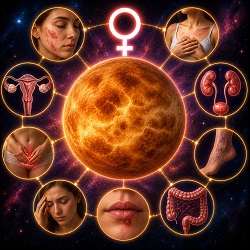
Venus, in Medical Astrology, represents harmony, balance, and the principle of attraction within the body. It governs systems that maintain equilibrium, including the kidneys, reproductive organs, endocrine functions, and aspects of circulation related to nourishment and refinement. Venus is also associated with the skin, complexion, and the body’s ability to retain moisture and softness.
Unlike more aggressive planetary forces, Venus operates gently, promoting restoration, healing, and balance. It is the planet of integration and comfort, ensuring that the body maintains internal harmony. When Venus is strong and well-placed, it contributes to physical beauty, balanced hormones, healthy reproductive function, and a general sense of well-being.
However, when Venus is afflicted, the very qualities it represents—balance and harmony—can become disrupted. This often leads to conditions that arise from imbalance, excess, or stagnation, rather than acute or aggressive disease.
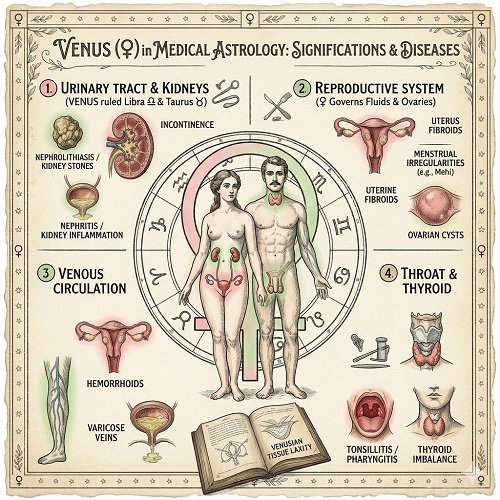
One of the primary areas governed by Venus is the kidneys and fluid balance. The kidneys play a crucial role in filtering the blood and maintaining the body’s internal equilibrium. When Venus is under stress, kidney function may be affected, leading to issues such as fluid retention, imbalance in electrolytes, or difficulty in eliminating waste efficiently. These conditions may develop gradually and often require attention to lifestyle and hydration.
Venus is also closely connected to the reproductive system, particularly in relation to fertility, hormonal balance, and sexual health. Afflictions may manifest as hormonal imbalances, menstrual irregularities, or reproductive disorders. In both men and women, Venus influences the body’s capacity for reproduction and the overall health of the reproductive organs.
The endocrine system, which regulates hormones, is another important domain of Venus. Hormones act as chemical messengers within the body, maintaining balance across various systems. When Venus is disturbed, this delicate balance may be disrupted, leading to symptoms such as mood swings, fatigue, or metabolic irregularities.
Venus is also associated with the skin and complexion. A well-balanced Venus often results in clear, healthy skin, while an afflicted Venus may lead to conditions such as acne, rashes, or other skin disorders. These issues often reflect internal imbalances, particularly in relation to hormones or fluid regulation.
A key characteristic of Venus-related diseases is their connection to pleasure and indulgence. Because Venus governs enjoyment and comfort, imbalances may arise from excess—such as overeating, lack of physical activity, or indulgence in rich or unhealthy foods. These habits can lead to weight gain, metabolic issues, or conditions related to poor circulation.
Venus-related conditions are often subtle and develop over time. Unlike Mars, which produces acute symptoms, or Saturn, which creates chronic restriction, Venus tends to produce conditions that arise from gradual imbalance. This makes early awareness and preventive care especially important.
The influence of other planets can modify Venus significantly. When affected by Mars, Venus may produce inflammatory conditions in the reproductive system or issues related to excess heat. Saturn’s influence may restrict Venusian functions, leading to dryness, reduced fertility, or hormonal suppression. Neptune may introduce confusion, sensitivity, or conditions related to toxicity and imbalance.
Emotionally, Venus is linked to relationships, affection, and the ability to experience pleasure. Emotional dissatisfaction or imbalance in relationships can manifest physically, particularly in areas governed by Venus. For example, stress in relationships may contribute to hormonal imbalances or skin conditions.
From a preventive standpoint, maintaining Venusian health involves cultivating balance, moderation, and harmony. This includes a balanced diet, regular physical activity, and attention to emotional well-being. Hydration is particularly important, as it supports the body’s ability to maintain fluid balance and eliminate toxins.
Aesthetic and sensory experiences also play a role in Venusian health. Surrounding oneself with beauty, engaging in relaxing activities, and maintaining a pleasant environment can have a positive effect on both mental and physical well-being. Venus thrives in conditions of comfort and harmony.
Dietary considerations for Venus emphasize moderation and nourishment. Avoiding excessive sugar, rich foods, and indulgent habits can help maintain balance. Incorporating fresh, natural foods supports the body’s ability to regulate itself effectively.
Ultimately, diseases of Venus highlight the importance of balance in all aspects of life. They remind us that health is not only about strength and resistance but also about harmony and integration. By cultivating moderation, emotional well-being, and a supportive lifestyle, individuals can align with Venusian energy and promote lasting health.