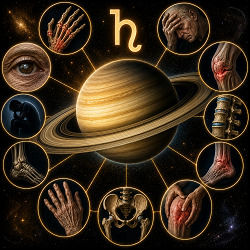
Saturn, in Medical Astrology, represents structure, limitation, endurance, and time. It governs the skeletal system, including bones, joints, teeth, and connective tissues, as well as processes associated with aging, degeneration, and chronic conditions. Unlike the fast-acting and energetic influence of Mars, Saturn operates slowly and persistently, often producing conditions that develop gradually and endure over long periods.
Saturn’s essential nature is restrictive. It consolidates, hardens, and stabilizes, but in doing so, it may also limit movement, reduce vitality, and create rigidity within the body. Because of this, Saturn is closely associated with chronic illness, degeneration, and conditions that arise from deficiency or obstruction rather than excess.
At a physical level, Saturn governs the bones and joints, forming the structural framework of the body. When Saturn is strong and well-balanced, it contributes to durability, endurance, and stability. Individuals with a strong Saturn often possess the ability to withstand hardship and maintain their health over time, even under challenging circumstances.
However, when Saturn is afflicted or poorly placed, its restrictive qualities may manifest as stiffness, weakness, or degeneration. Conditions such as arthritis, joint pain, osteoporosis, and spinal issues are commonly associated with Saturn. These disorders typically develop slowly and may worsen over time if not properly managed.
Saturn is also linked to deficiency and depletion. Unlike Jupiter, which expands and accumulates, Saturn reduces and restricts. This can result in a lack of essential nutrients, poor circulation, or reduced vitality. The body may struggle to regenerate, leading to fatigue, slow healing, and increased susceptibility to chronic conditions.
Another key area influenced by Saturn is the skin. The skin, as the body’s outer barrier, reflects Saturn’s role in protection and limitation. Afflictions may result in dryness, roughness, or chronic skin conditions such as eczema or psoriasis. These conditions often reflect deeper imbalances within the body, particularly those related to circulation or elimination.
Saturn also governs the process of aging. As time passes, the body naturally undergoes changes associated with Saturn’s influence—reduced flexibility, slower metabolism, and gradual wear and tear. When Saturn is prominent in the chart, these processes may be more pronounced, emphasizing the importance of long-term care and maintenance.
Emotionally, Saturn is associated with discipline, fear, and restraint. Prolonged emotional stress, anxiety, or feelings of isolation can manifest physically, contributing to conditions such as weakness, chronic fatigue, or tension-related disorders. This highlights the deep connection between emotional states and physical health under Saturn’s influence.
The interaction of Saturn with other planets further refines its effects. When combined with Mars, Saturn may create tension between activity and restriction, leading to conditions involving both inflammation and stiffness, such as joint inflammation or injury. When influenced by Mercury, Saturn may produce mental strain, depression, or nervous exhaustion. Neptune’s influence may lead to chronic, unclear conditions that are difficult to diagnose.
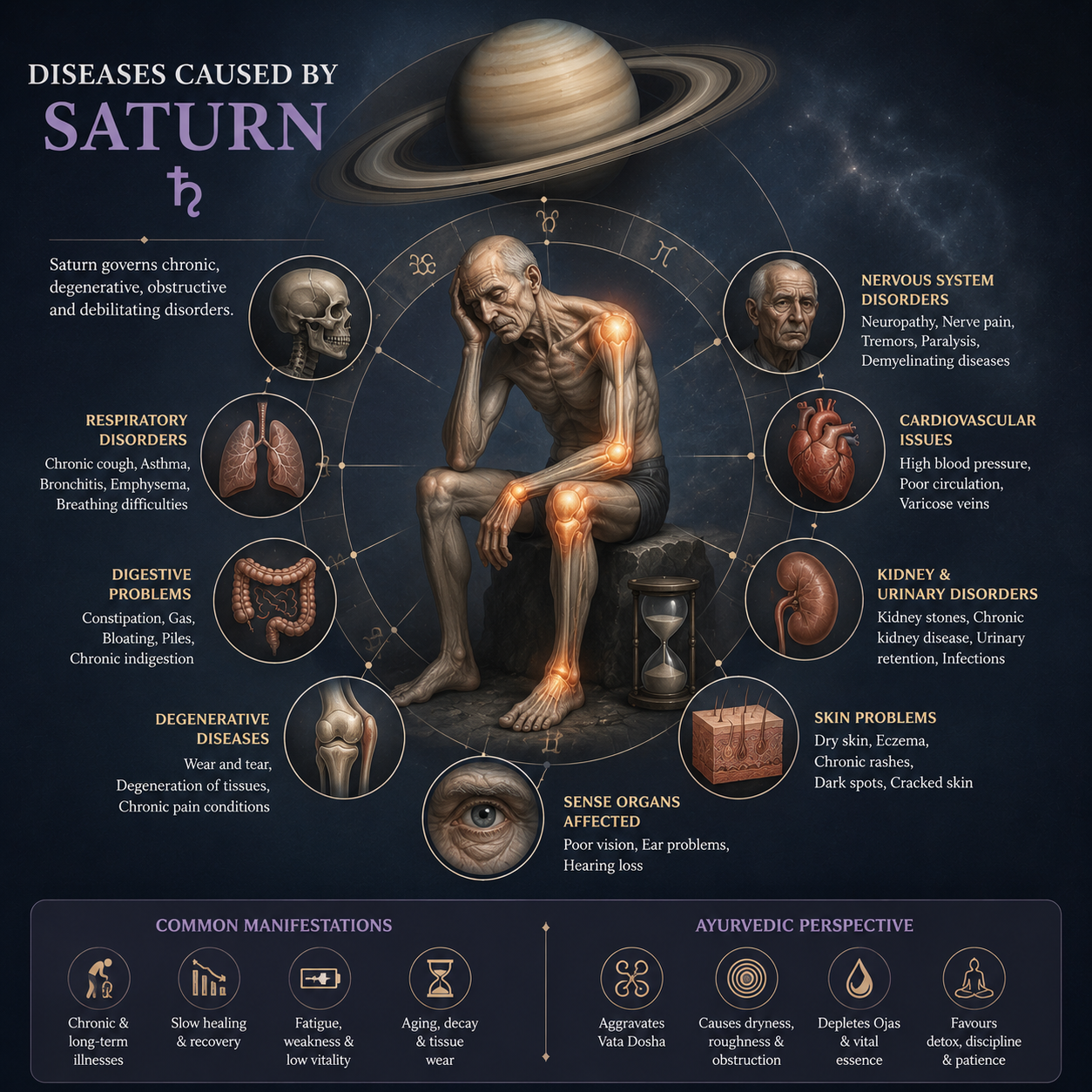
Saturn-related diseases are typically long-lasting and resistant to quick cures. They require patience, discipline, and a consistent approach to treatment. Unlike acute conditions, which may resolve quickly, Saturnian illnesses demand sustained effort and careful management.
From a preventive perspective, maintaining balance in Saturn’s energy involves strengthening the body while avoiding excessive rigidity. Regular physical activity, particularly exercises that promote flexibility and joint health, is essential. Stretching, yoga, and low-impact movement can help counteract stiffness and maintain mobility.
Dietary considerations for Saturn focus on nourishment and replenishment. Ensuring adequate intake of essential nutrients, particularly those that support bone health, is important. Avoiding excessive restriction or harsh dieting helps prevent depletion.
Rest and recovery are equally important. While Saturn emphasizes discipline, it is essential to balance effort with relaxation. Overwork and prolonged stress can exacerbate Saturnian conditions, leading to burnout or chronic fatigue.
Emotionally, cultivating resilience and a positive outlook can help mitigate Saturn’s influence. Building supportive relationships and maintaining a sense of purpose can reduce feelings of isolation.
Ultimately, diseases of Saturn highlight the importance of patience, discipline, and long-term care. Saturn teaches that health is not achieved through quick fixes but through consistent effort and awareness. By working with Saturn’s energy rather than resisting it, individuals can build strength, maintain stability, and support their health over time.