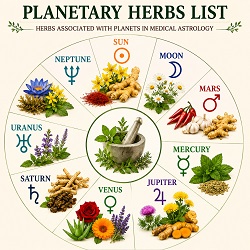
In Medical Astrology, each planet is associated with a distinct group of herbs that reflect its energetic qualities. These herbs can be used to strengthen, balance, or harmonize planetary influences within the body, making them an important tool in preventive and supportive healing.
The correspondence between planets and herbs is based on traditional systems of herbalism and astrology, where each plant carries a vibrational affinity with a particular planetary force. By working with these correspondences, one can create a more personalized and effective approach to natural healing.
The Sun governs vitality, the heart, and overall life energy. Solar herbs are warming and strengthening. They are used to boost immunity, improve circulation, and restore strength during periods of weakness.
Common Solar herbs include: Ashwagandha, Ginger, Cinnamon, Saffron, and Sunflower.
These herbs help stimulate vitality and are particularly beneficial when energy levels are low or recovery is needed.
The Moon governs fluids, digestion, and emotional well-being. Lunar herbs are cooling, soothing, and nurturing, helping to calm the system and restore balance.
Common Lunar herbs include: Aloe Vera, Cucumber, Lotus, Chamomile, and White Sandalwood.
These herbs support digestion, hydration, and emotional stability, making them ideal for health-related conditions.
Mercury rules the nervous system and mental processes. Mercurial herbs are light, aromatic, and stimulating in a balanced way, supporting clarity and coordination.
Common Mercurial herbs include: Brahmi, Fennel, Dill, Mint, and Coriander.
These herbs enhance mental focus, improve digestion, and calm the system.
Venus governs the kidneys, reproductive system, and skin. Venusian herbs are soothing, moisturizing, and balancing, promoting beauty and internal harmony.
Common Venusian herbs include: Rose, Shatavari, Licorice, Cardamom, and Jasmine.
These herbs support hormonal balance, general health, and overall well-being.
Mars governs muscles, blood, and heat. Martian herbs are stimulating, warming, and are used to improve circulation and combat stagnation.
Common Martian herbs include: Garlic, Onion, Black Pepper, Mustard, and Nettle.
These herbs are effective in addressing cold conditions, low energy, and infections, but should be used with moderation.
Jupiter governs the liver, metabolism, and growth processes. Jupiterian herbs are nourishing and expansive, supporting digestion and overall development.
Common Jupiterian herbs include: Turmeric, Sage, Dandelion, Fenugreek, and Basil (Tulsi).
These herbs help improve metabolism, detoxify the body, and strengthen natural defenses.
Saturn governs bones, joints, and chronic conditions. Saturnine herbs are grounding and often used for long-term healing.
Common Saturnine herbs include: Horsetail, Comfrey, Sesame, Myrrh, and Bhringraj.
These herbs support bone health, nourish tissues, and aid in slow healing processes.
Uranus governs the higher nervous system and sudden changes. Uranian herbs are less traditionally defined but are generally calming and stabilizing.
Common Uranian herbs include: Valerian, Skullcap, Lavender, and Passionflower.
These herbs help calm the body and reduce sudden upheavals of energy.
Neptune governs the immune system and detoxification. Neptunian herbs are cleansing, subtle, and often supportive of spiritual and emotional balance.
Common Neptunian herbs include: Neem, Echinacea, Milk Thistle, Blue Lotus, and Peppermint.
These herbs aid in cleansing the body, strengthening immunity, and supporting sensitive systems.
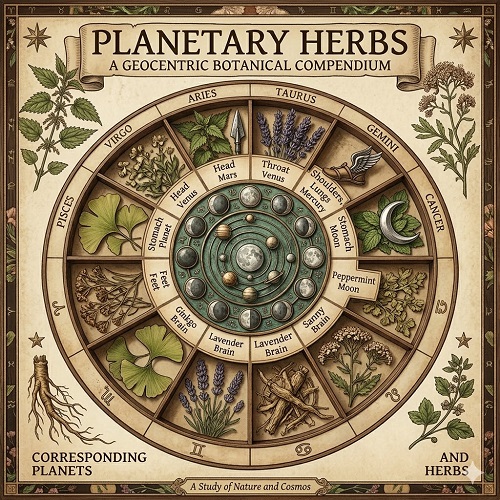
The use of planetary herbs should always be personalized. The goal is not to stimulate a planet excessively but to restore balance. For example, if Mars is overly strong, cooling and calming herbs may be more appropriate than stimulating ones.
Herbal remedies work best when combined with proper diet, lifestyle, and awareness of one’s astrological constitution.