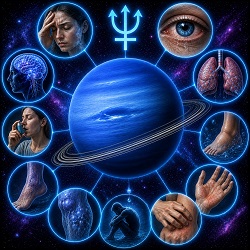
Neptune, in Medical Astrology, represents sensitivity, dissolution, and the subtle forces that operate beneath the surface of physical reality. It governs the immune system, the lymphatic system, glandular activity, and the body’s response to toxins, infections, and environmental influences. Unlike the clearly defined effects of planets such as Mars or Saturn, Neptune’s influence is often diffuse, elusive, and difficult to identify, making it one of the most complex factors in medical interpretation.
At its core, Neptune is associated with permeability and boundary dissolution. It blurs the lines between systems, allowing substances, energies, and influences to pass through more easily. While this quality can enhance sensitivity and adaptability, it can also lead to vulnerability, particularly when the body is exposed to harmful substances or overwhelming environments.
One of the primary areas governed by Neptune is the immune system. This system is responsible for distinguishing between what belongs to the body and what does not. When Neptune is well-balanced, it supports a refined sensitivity that allows the body to respond appropriately to threats. However, when Neptune is afflicted, this discrimination may become impaired. The immune system may become either too weak, allowing infections to take hold, or overly sensitive, leading to allergic reactions or autoimmune conditions.
Neptune is also closely linked to toxicity and poisoning, both literal and symbolic. This includes exposure to chemicals, pollutants, drugs, and other substances that affect the body’s balance. Neptune-related illnesses often involve the accumulation of toxins that are not easily eliminated. These conditions may develop gradually and may not present clear or immediate symptoms, making them difficult to diagnose.
Another key characteristic of Neptune-related disease is its hidden or mysterious nature. Symptoms may be vague, inconsistent, or difficult to trace to a specific cause. Individuals may experience fatigue, weakness, or general malaise without a clear diagnosis. This can lead to frustration, as traditional medical approaches may struggle to identify the underlying issue.
Neptune also governs the lymphatic system, which plays a crucial role in detoxification and immune function. When this system is compromised, the body may struggle to eliminate waste and toxins effectively. This can lead to swelling, fluid retention, or a general sense of heaviness.
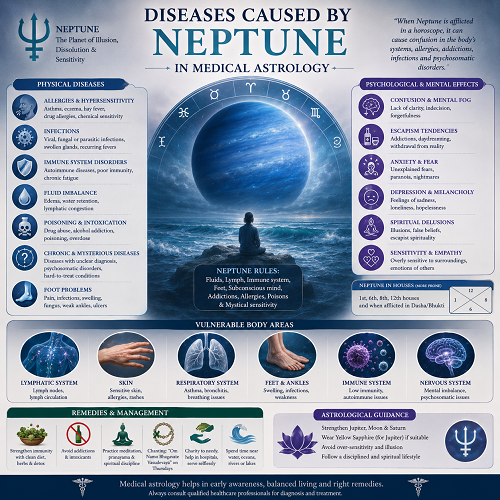
The nervous system is another area influenced by Neptune, particularly in relation to sensitivity and perception. Individuals with strong Neptunian influence may be highly sensitive to their environment, including noise, light, and emotional standing. This heightened sensitivity can lead to overstimulation, fatigue, or conditions related to sensory overload.
Neptune is strongly associated with addiction and escapism. This may include dependency on substances such as alcohol or drugs, as well as behavioral patterns that involve avoidance or withdrawal from reality. These tendencies often arise from a desire to escape discomfort or sensitivity, but they can ultimately weaken the body and compromise health.
Emotionally and psychologically, Neptune is linked to imagination, intuition, and compassion. However, when imbalanced, it may lead to confusion, delusion, or a lack of clarity. This can contribute to emotional strain, which may manifest physically as fatigue, or chronic conditions.
The influence of other planets can significantly modify Neptune’s expression. When combined with Mercury, Neptune may produce confusion in thinking, memory issues, or difficulty concentrating. When influenced by Mars, it may lead to infections or conditions that spread subtly within the body. Saturn’s influence may create chronic, lingering conditions that are difficult to resolve.
Neptune-related diseases are often chronic and difficult to diagnose, requiring a holistic and attentive approach. Treatment may involve not only addressing physical symptoms but also considering environmental, emotional, and psychological factors.
From a preventive perspective, maintaining Neptunian balance involves protecting the body from harmful influences and supporting detoxification. This includes reducing exposure to toxins, maintaining a clean and supportive environment, and ensuring proper hydration to support the body’s natural elimination processes.
Rest and recovery are particularly important, as Neptune is associated with sleep and the body’s ability to restore itself. Adequate rest allows the immune system to function effectively and helps prevent the accumulation of toxins in the body.
Practices that promote grounding and clarity, such as meditation, mindfulness, and gentle physical activity, can help counteract Neptune’s tendency toward diffusion. These practices support focus and emotional stability.
Dietary considerations for Neptune emphasize purity and simplicity. Fresh, natural foods that are free from excessive processing or additives support the body’s ability to maintain balance. Avoiding substances that impair clarity, such as alcohol or drugs, is particularly important.
Ultimately, diseases of Neptune highlight the importance of clarity, protection, and balance in a world of subtle influences. Neptune’s energy can be both healing and destabilizing, depending on how it is managed. By cultivating awareness, maintaining boundaries, and supporting the body’s natural defenses, individuals can navigate Neptune’s influence and maintain health and well-being.