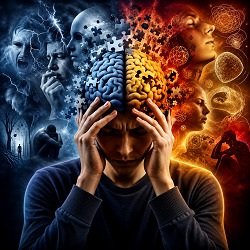
In Medical Astrology, the study of mental disorders occupies a significant and sensitive place, reflecting the intricate connection between the mind and the body. Mental health is not viewed in isolation but as part of a broader system in which emotional, psychological, and physical factors are deeply intertwined. The birth chart provides insight into these connections, revealing patterns that influence how an individual thinks, feels, and responds to life.
The primary indicators of mental health in astrology are the Moon and Mercury. The Moon governs emotions, instincts, and the subconscious mind, while Mercury represents thought processes, communication, and intellect. Together, they form the foundation of mental functioning, shaping both emotional responses and cognitive patterns.
The Moon reflects the individual’s emotional landscape. It governs how feelings are experienced, processed, and expressed. A strong and well-supported Moon contributes to emotional stability, resilience, and the ability to cope with stress. It allows the individual to adapt to changing situations and maintain balance.
When the Moon is afflicted, however, emotional instability may arise. This can manifest as mood swings, depression, or heightened sensitivity to external influences. Because the Moon is closely linked to the body’s rhythms, such imbalances may also affect sleep, digestion, and overall physical health.
Mercury, on the other hand, governs the rational mind and the ability to process information. It influences memory, concentration, and communication. A well-balanced Mercury supports clear thinking, adaptability, and effective expression. When Mercury is afflicted, difficulties may arise in concentration, decision-making, or communication.
Mental disorders associated with Mercury often involve nervous tension, anxiety, and disturbances. The individual may experience restlessness, overthinking, or difficulty focusing. In more severe cases, this may extend to confusion, disorganized thinking, or communication problems.
The interaction between the Moon and Mercury is particularly important. When these two are in harmony, emotional and rational processes work together smoothly, supporting mental stability. When they are in conflict, there may be a disconnect between feelings and thoughts, leading to mental strain.
Other planets also play significant roles in mental health. Saturn, for example, is associated with depression, restriction, and feelings of isolation. Its influence may lead to pessimism, fear, or a sense of heaviness. Mars can contribute to irritability, anger, and impulsive behavior, while Uranus may bring sudden disturbances or hallucinations. Neptune, as discussed earlier, is linked to confusion, illusion, and conditions that blur the boundary between reality and imagination.
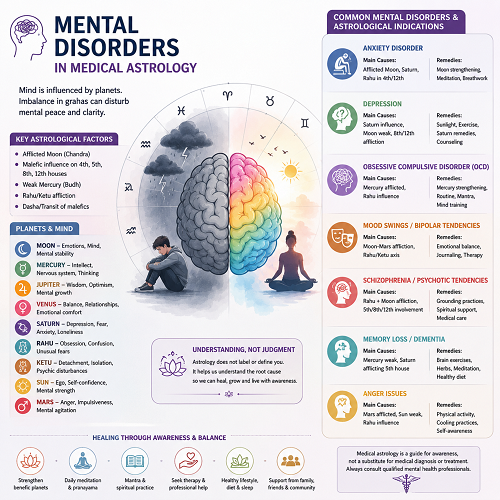
Mental disorders in astrology are often categorized based on the nature of planetary influence. Conditions involving anxiety are typically linked to Mercury. Mood disorders and emotional instability are associated with the Moon. Depression and chronic strain often involve Saturn, while more sudden or erratic conditions may involve Uranus.
It is important to recognize that these influences do not act in isolation. Mental health is shaped by a combination of factors, including genetics, environment, life experiences, and personal choices. Astrology provides a symbolic framework for understanding these influences but does not replace medical care.
From a modern perspective, the role of Medical Astrology in mental health is primarily diagnostic and supportive rather than predictive. It helps identify patterns and tendencies, allowing individuals to better understand their world and respond to challenges more effectively.
Prevention and management of mental disorders involve both astrological awareness. Maintaining balance is essential, particularly for those with strong lunar influences. This may involve supportive relationships, and practices that promote relaxation and self-awareness.
For Mercury-related conditions, managing mental activity is key. Reducing overstimulation, limiting excessive information intake, and practicing mindfulness can help calm the mind. Structured thinking and clear communication also support Mercurial balance.
Saturn-related mental challenges often require patience and long-term support. Building structure, setting realistic goals, and seeking professional guidance can help address feelings of limitation or isolation.
Physical health also plays a crucial role in mental well-being. Proper nutrition, exercise, and sleep support the brain and nervous system. The connection between body and mind means that improvements in one area often benefit the other.
Ultimately, the study of mental disorders in Medical Astrology emphasizes the importance of integration between mind, body, and environment. It encourages a holistic approach that recognizes the complexity of mental health and the many factors that influence it.
Rather than focusing solely on illness, astrology offers a path toward understanding, awareness, and growth. By recognizing patterns and working with them consciously, individuals can develop resilience, maintain balance, and support their overall well-being.