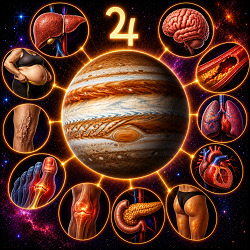
Jupiter, in Medical Astrology, represents growth, expansion, abundance, and protection. It governs the liver, metabolism, and the processes associated with nourishment and development. Unlike the sharp and immediate energy of Mars, Jupiter operates in a broader, more expansive manner, influencing the body’s ability to grow, regenerate, and maintain overall well-being.
Jupiter is often considered a benefic planet, associated with good fortune and protection. In matters of health, it is linked to recovery, resilience, and the body’s natural capacity to heal. A strong Jupiter can provide a buffer against illness, supporting the body during times of stress and promoting a sense of vitality and optimism.
However, Jupiter’s expansive nature also carries the potential for excess. While it supports growth, it does not inherently impose limits. As a result, Jupiter-related diseases often arise from overgrowth, accumulation, or imbalance caused by excess.
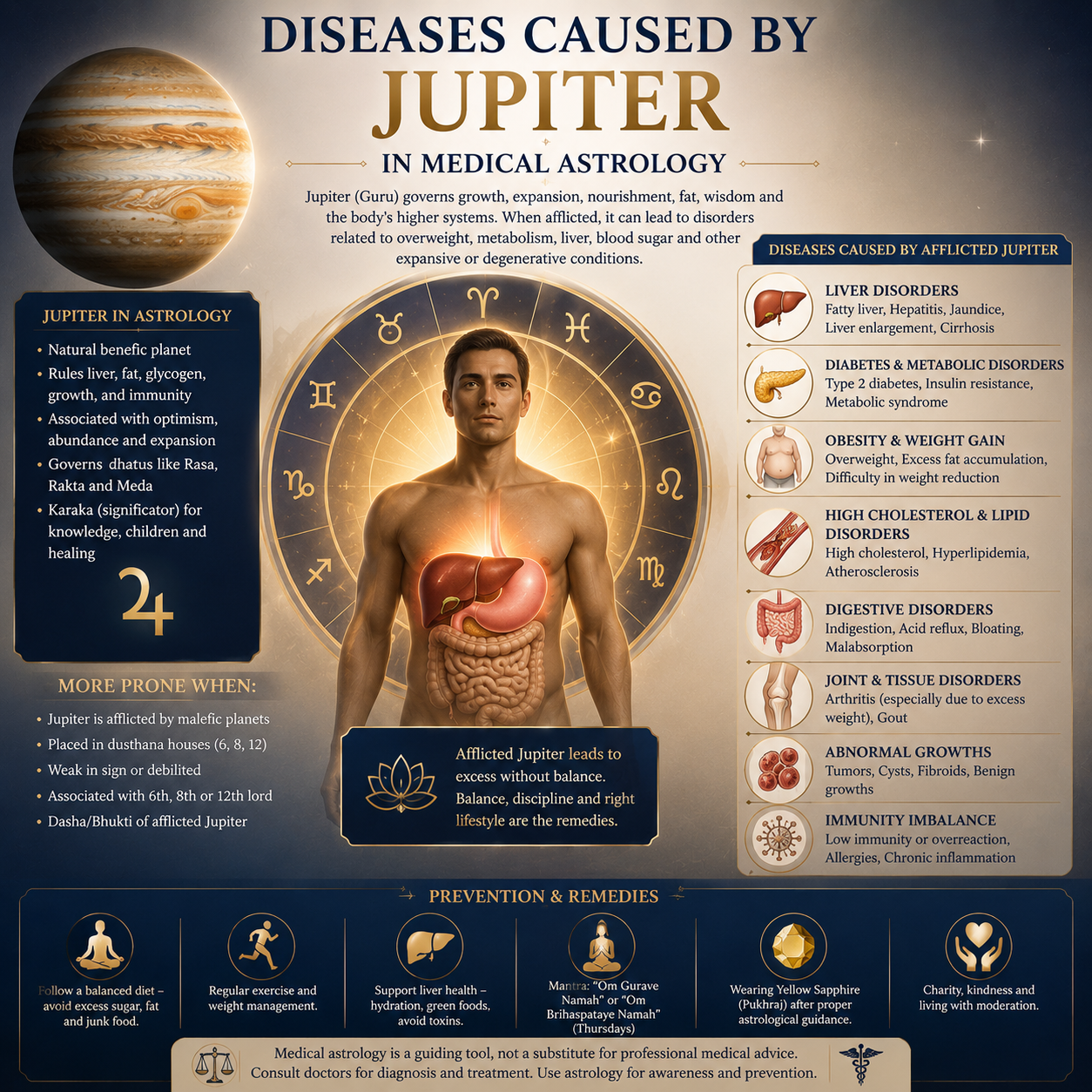
The liver, one of the primary organs governed by Jupiter, plays a central role in metabolism, detoxification, and the processing of nutrients. When Jupiter is well-balanced, the liver functions efficiently, supporting digestion and overall health. When afflicted, however, it may lead to liver-related disorders, including poor metabolism, accumulation of toxins, or difficulties in processing fats and sugars.
Jupiter is also associated with the circulatory system and blood quality, particularly in relation to nourishment. It influences how nutrients are distributed throughout the body and how effectively the body maintains its internal balance. When imbalanced, this can lead to issues such as high cholesterol, excessive blood sugar, or other metabolic disturbances.
One of the most common manifestations of Jupiter-related imbalance is obesity or weight gain. Because Jupiter encourages growth and abundance, it may lead to overconsumption or difficulty regulating intake. This is often linked to a love of comfort, rich foods, or indulgent habits. Over time, these tendencies can contribute to metabolic disorders and reduced physical efficiency.
Jupiter also influences the endocrine system to some extent, particularly in relation to growth and hormonal balance. Excessive or uncontrolled growth processes may manifest as benign tumors, swelling, or other conditions involving enlargement.
Emotionally, Jupiter is associated with optimism, expansion, and a desire for enjoyment. While these qualities are generally positive, they can lead to excess when not balanced with discipline. Overindulgence, whether in food, activity, or lifestyle, is a common theme in Jupiter-related health issues.
The influence of other planets can shape how Jupiter’s energy is expressed. When combined with Venus, there may be a strong tendency toward indulgence and pleasure, increasing the risk of excess. When influenced by Saturn, Jupiter’s expansive energy may be restricted, leading to imbalance between growth and limitation. Mars may intensify Jupiter’s effects, leading to overactivity or excessive strain on the body.
Unlike Mars-related diseases, which are acute, Jupiter-related conditions tend to develop gradually over time. They are often the result of long-term habits rather than sudden events. This makes prevention and lifestyle management particularly important.
From a preventive perspective, maintaining balance in Jupiter’s energy involves moderation and awareness. While Jupiter encourages growth and enjoyment, it is essential to set limits and avoid excess. A balanced diet, regular exercise, and mindful consumption are key to maintaining health.
Dietary considerations for Jupiter emphasize moderation and quality. Reducing excessive intake of rich, fatty, or sugary foods can help prevent metabolic imbalance. Incorporating fresh, natural foods supports the body’s ability to process nutrients effectively.
Physical activity is also important for balancing Jupiter’s expansive tendencies. Regular exercise helps regulate weight, improve circulation, and support overall metabolic function. It also provides an outlet for excess energy, preventing stagnation.
Emotionally, cultivating gratitude and contentment can help balance Jupiter’s desire for more. Recognizing when enough is enough is a key aspect of maintaining health under Jupiter’s influence.
Ultimately, diseases of Jupiter highlight the importance of balance in growth and moderation in abundance. Jupiter’s energy is fundamentally supportive and life-enhancing, but it must be guided with awareness and discipline. By embracing moderation and maintaining equilibrium, individuals can benefit from Jupiter’s protective qualities while avoiding the pitfalls of excess.