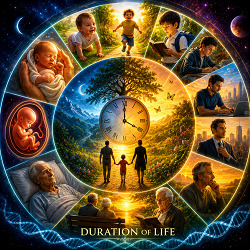
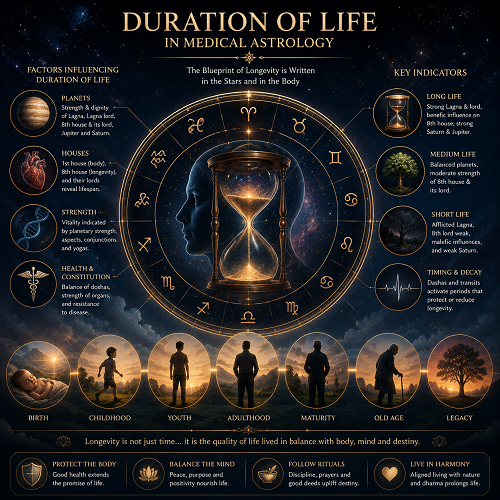
The duration of life is not determined by a single factor but by the combined influence of several key elements within the chart. Among these, the most important are the Ascendant, the Hyleg, and the supporting or challenging influences of other planets. Together, these components provide a framework for assessing the strength and sustainability of life energy.
The Ascendant plays a crucial role in this analysis, as it represents the physical body and its capacity to endure. A strong Ascendant, supported by favorable aspects, suggests a resilient constitution capable of withstanding stress and illness. Conversely, an afflicted Ascendant may indicate vulnerability, particularly when combined with other challenging factors.
The Hyleg, as the giver of life, is central to the assessment of longevity. Its condition reflects the strength of the life force itself. A well-supported Hyleg indicates a stable and enduring vitality, while a weakened or heavily afflicted Hyleg may suggest periods of vulnerability. The interaction between the Hyleg and other planets provides further insight into how life energy is sustained or challenged over time.
Benefic planets, particularly Jupiter and Venus, play a protective role in matters of longevity. Their influence can enhance vitality, support recovery, and mitigate the effects of more difficult planetary configurations. For example, a strong Jupiter may promote growth and resilience, while Venus may contribute to balance and harmony within the body.
Malefic planets, especially Saturn and Mars, are often associated with challenges to longevity. Saturn, with its qualities of restriction and limitation, may indicate chronic conditions or a gradual decline in vitality. Mars, representing energy and aggression, may introduce sudden events or acute conditions that impact health. However, it is important to recognize that these influences are not inherently negative; they may also contribute to strength and endurance when properly balanced.
The aspects formed between planets are another critical factor. Harmonious aspects, such as trines and sextiles, facilitate the smooth flow of energy and support overall health. Challenging aspects, such as squares and oppositions, create tension that may manifest as physical or psychological strain. These tensions, if not managed effectively, can impact the longevity of the individual.
In traditional astrology, additional techniques were used to estimate the duration of life, including the calculation of planetary periods and the analysis of specific points such as the Alcocoden. These methods aimed to provide a more precise measurement of lifespan. However, they require careful interpretation and are often subject to variation depending on the system used.
Modern Medical Astrology takes a more holistic and ethical approach, focusing less on predicting exact lifespan and more on understanding the factors that influence vitality and well-being. Rather than asking how long a person will live, the emphasis is placed on how well they can live and how they can maintain health over time.
Longevity is closely tied to the balance between vitality and resistance. Vitality, represented by the Sun and Hyleg, reflects the energy available to sustain life, while resistance, indicated by the Ascendant, reflects the body’s ability to withstand external challenges. When these factors are in harmony, the individual is more likely to experience a long and balanced life.
When imbalance occurs, it may lead to periods of illness or reduced vitality.
Lifestyle and environmental factors also play a significant role in determining longevity. Even a chart with strong indicators of vitality can be undermined by poor habits, stress, or adverse conditions. Conversely, a chart with vulnerabilities can be supported through conscious choices, healthy living, and medical care.
Another important consideration is the role of cycles and timing. Planetary transits and progressions can activate certain areas of the chart, bringing periods of strength or challenge. Understanding these cycles allows individuals to anticipate potential difficulties and take preventive measures.
Ultimately, the study of the duration of life in Medical Astrology is not about predicting an endpoint but about understanding the journey. It highlights the factors that support or challenge vitality and encourages a proactive approach to health. By recognizing these influences, individuals can make informed decisions that enhance their well-being and support a balanced and fulfilling life.