Mars, in Medical Astrology, represents energy, action, heat, and the body’s immediate response to challenge. It governs the muscles, blood, adrenal system, and the mechanisms associated with defense and survival. Mars is the force that mobilizes the body—it initiates movement, stimulates circulation, and activates the immune response when confronted with threats.
Because of its fiery and dynamic nature, Mars is closely associated with acute conditions, particularly those involving inflammation, heat, and sudden onset. Unlike slower-moving planetary influences that produce gradual or chronic illness, Mars acts quickly and often intensely. Its effects are immediate, forceful, and sometimes disruptive.
At a physical level, Mars governs the muscular system, red blood cells, and aspects of circulation related to oxygenation and vitality. A strong and well-balanced Mars contributes to physical strength, endurance, and the ability to respond effectively to stress. It enhances courage, initiative, and the body’s capacity to fight off infections.
However, when Mars is excessive, poorly placed, or afflicted by challenging aspects, its energy can become destructive rather than constructive. One of the most common manifestations of Martian imbalance is inflammation. This may appear in the form of fevers, infections, swelling, or conditions characterized by heat and irritation. Inflammation is essentially the body’s defense mechanism working in overdrive, and Mars governs this response.
Mars is also strongly linked to accidents and injuries. Because it represents action and impulsiveness, an afflicted Mars may indicate a tendency toward reckless behavior or a higher likelihood of physical harm. Cuts, burns, bruises, and surgical interventions are often associated with Mars. These events are typically sudden and may result from haste, impatience, or excessive force.
Another important aspect of Mars is its connection to the blood. Disorders related to blood circulation, high blood pressure, or conditions involving excessive heat in the bloodstream can be linked to Martian imbalance. In some cases, this may extend to issues such as infections or conditions involving toxins circulating in the body.
Mars also influences the adrenal glands, which regulate the body’s stress response. When Mars is overstimulated, the individual may experience heightened stress, irritability, or aggression. This can lead to exhaustion over time, particularly if the body remains in a constant state of alertness. The “fight-or-flight” response, governed by Mars, is essential for survival but can become harmful if continuously activated.
Emotionally, Mars is associated with anger, assertiveness, and the expression of will. Suppressed anger can manifest physically as tension, headaches, or inflammatory conditions, while uncontrolled anger may lead to stress-related illnesses. This highlights the importance of healthy emotional expression in maintaining balance.
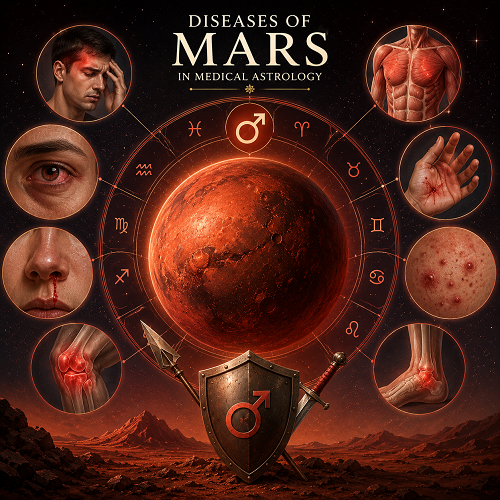
The influence of other planets can significantly modify Mars. When combined with Saturn, Mars may produce blocked or restricted energy, leading to internalized tension, stiffness, or conditions that involve both inflammation and limitation, such as joint pain. When influenced by Mercury, Mars may create nervous agitations, sharp mental stress, or headaches. Neptune’s influence may lead to confusion in diagnosis or infections that spread subtly within the body.
Mars-related diseases are often acute but short-lived, especially when the individual has strong overall vitality. However, repeated Martian stress or chronic overactivation can lead to longer-term issues, particularly if the body does not receive adequate rest and recovery.
From a preventive perspective, managing Mars involves balancing activity with rest. Physical exercise is essential for channeling Martian energy constructively. Activities such as sports, strength training, or dynamic movement help release excess energy and reduce the risk of internal tension.
At the same time, it is important to avoid overexertion. Excessive physical strain can lead to injury or burnout. Learning to recognize the body’s limits is crucial for maintaining balance.
Dietary considerations for Mars focus on reducing excess heat in the body. Spicy, oily, or highly stimulating foods may exacerbate inflammation, while cooling and hydrating foods can help restore balance. Adequate hydration is particularly important, as it supports circulation and helps regulate body temperature.
Stress management is another key factor. Practices such as deep breathing, meditation, or relaxation techniques can help calm the nervous system and prevent the overactivation of the fight-or-flight response.
Ultimately, diseases of Mars highlight the importance of controlled energy and conscious action. Mars is not inherently harmful—it is essential for survival and vitality. However, when its energy is misdirected or excessive, it can lead to conflict within the body. By learning to channel this energy constructively, individuals can harness the strength of Mars while minimizing its disruptive potential.