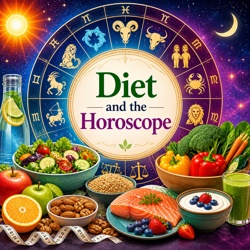
Diet is one of the most practical and powerful ways to support health, and in Medical Astrology, it is closely linked to the individual’s astrological makeup. The horoscope reveals not only what the body needs for nourishment but also how it processes and utilizes food. By aligning dietary habits with astrological indications, one can enhance vitality, prevent imbalance, and support overall well-being.
The starting point for understanding diet in astrology is the Ascendant and its ruling planet. These factors indicate the body’s constitution and its general nutritional needs. For example, a fiery constitution may require cooling and calming foods, while an earthy constitution may benefit from lighter, easily digestible food to prevent stagnation.
The Moon plays a particularly important role in dietary considerations. As the ruler of digestion and bodily fluids, it reflects how the body responds to food and how effectively it assimilates nutrients. A well-balanced Moon supports healthy digestion and regular eating patterns, while an afflicted Moon may lead to digestive disturbances, food sensitivities, or emotional eating habits.
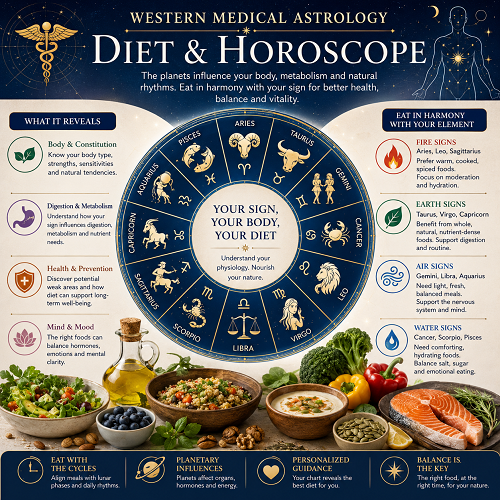
Each zodiac sign is associated with certain dietary tendencies and needs. Fire signs often benefit from cooling foods and adequate hydration to balance their system. Earth signs require a diet that supports metabolism and prevents heaviness, often benefiting from fresh and raw foods. Air signs need food that supports the nervous system, while water signs require nourishment that stabilizes emotions and supports fluid balance.
The planets also influence dietary patterns. Venus, for example, is associated with pleasure and indulgence, often leading to a preference for rich foods. When Venus is imbalanced, moderation becomes essential to avoid excess. Jupiter, the planet of expansion, may encourage overeating or a love of abundance, making portion control and mindful consumption important.
Mercury influences the nervous system and is sensitive to stimulants. Individuals with strong Mercury influence may need to limit caffeine and other stimulating substances to maintain balance. Mars, associated with heat and energy, may require a diet that reduces inflammation, avoiding overly spicy foods.
Saturn, representing restriction and deficiency, may indicate the need for a nutrient-rich diet that supports long-term health. Individuals with strong Saturn influence may benefit from foods that support the bones and structure of the body.
Neptune’s influence suggests sensitivity to substances, including food additives, alcohol, and toxins. A simple diet is often beneficial, focusing on natural and unprocessed foods. Uranus, with its association to the nervous system, may require a diet that supports stability and avoids sudden fluctuations in energy levels.
Another important factor is the Sixth House, which governs daily habits, including eating patterns. This house reveals not only what the body needs but also how consistently those needs are met. Irregular eating habits, poor food choices, or lack of discipline in diet can contribute to health issues, regardless of the inherent strength of the chart.
Timing also plays a role in dietary health. The Moon’s cycles, for example, influence appetite and digestion. Many traditional systems of astrology recommend aligning eating habits with lunar phases, as the body’s ability to absorb and process nutrients may vary.
Emotional factors are equally important. Food is not only physical nourishment but also a source of comfort and emotional satisfaction. Imbalances in the Moon or Venus may lead to emotional eating, where food is used to cope with stress or dissatisfaction. Recognizing these patterns is essential for maintaining a healthy relationship with food.
From a practical perspective, the key to dietary balance in astrology is moderation and awareness. No single diet suits everyone, as each individual’s needs are shaped by their unique chart. By understanding these needs, one can make choices that support health and prevent imbalance.
Hydration is another essential factor. Water plays a vital role in maintaining mental balance, supporting digestion, and eliminating toxins. Regardless of astrological influences, adequate hydration is fundamental to health.
Ultimately, diet in Medical Astrology is about aligning nourishment with the body’s natural rhythms and tendencies. It emphasizes quality, balance, and consistency, encouraging individuals to develop habits that support long-term well-being. By integrating astrological insight with practical knowledge, one can create a dietary approach that is both personalized and sustainable.
| • Find your ideal diet through personalized astrological dietary wisdom. |