INTRODUCTION
While one of the commonest of human ailments, nervous tension is not only one of the most baffling to cope with, but one of the most difficult to overcome. Its effects upon the body and mind are almost endless in variety and scope, being the primary cause of many disorders, whether directly or indirectly. Strain on the muscles and a nerve is one of the great destroyers.
YOGA AND NERVOUS TENSION
YOGA POSES FOR NERVOUS TENSION
Legs up the Wall Pose
Legs-Up-The-Wall pose (Viparita Karani) is a wonderful yoga position that few of us take the time to do and most of us need. Much of the yoga currently practiced here in the US is active and often very vigorous. Yoga stresses the Importance of balancing these yang (active) poses with yin (passive) poses. Legs-Up-The-Wall pose fits the bill perfectly. It is a gentle inversion that helps to relieve the effects of stress by soothing the nervous system, increasing circulation and allowing the mind to calm. It is especially great for people who spend too much time sitting and standing since it relieves swelling and fatigue in the legs and feet by reversing the effects of gravity.
Shoulder Stand Pose
The Shoulder Stand stimulates and rejuvenates your entire body. In this exercise, you build up both power and a new structure in your back and you relax tension in well-known stress areas like the neck and the lower back. The muscles of your lower back get stronger, the chest and shoulders can move more freely and the back gets straighter.
Plow Pose
The Sanskrit word Hala means plow, as in a traditional plow that is drawn by a horse or oxen. When performing this posture your body resembles a plow. This pose is often one of the first inversions to be practiced after Adho Mukha Svanasana (the downward facing dog pose) and Prasarita Padottanasana (the wide-legged standing forward bend).Inversions bring fresh blood and oxygen to the brain which is revitalizing and refreshing.
The Downward Facing Dog
This pose is named as such as it resembles the shape of a Dog stretching itself out. This pose helps to strengthen, stretch and reduce stiffness in the legs while strengthening and shaping the upper body. Holding this pose for a minute or longer will stimulate and restore energy levels if you are tired. Regular practice of this pose rejuvenates the entire body and gently stimulates your nervous system.
Reclining Hero Pose
The reclining hero pose in yoga is a great way to improve and enhance your flexibility.Vira means a hero, warrior or champion; Supta is to lie down. This is a deep stretch for the front of the thighs, lower legs and feet. It also stretches the abdominal muscles, the spine and the shoulders. Make sure that your lower back isn’t too arched when holding this pose.
YOGA ASANAS FOR NERVOUS TENSION
BHRAMRIPRANAYAMA

Bhramri Pranayama is one of the easiest Pranayama to perform and is very beneficial for curing stress and nervous tension. Bhramri means humming sound of bee or wasp. While practicing this humming sound is produced, hence this pranayama is known as Bhramri Pranayama. Usually it is performed at the end of the yoga session.Bhramri Pranayama is one of the easiest Pranayama to perform and is very beneficial for curing stress and nervous tension. Bhramri means humming sound of bee or wasp. While practicing this humming sound is produced, hence this pranayama is known as Bhramri Pranayama. Usually it is performed at the end of the yoga session.
Steps
• Sit in any asana where in you spine is straight, like Padmasana, Ardh Padmasana, Vajrasana etc.
• Using both hands close ears with thumbs, put the index fingers on forehead, middle fingers are placed gently on the closed eyes making sure not to press them. Rest remaining two fingers on base of nose nearer to the eyes.
• Breathe in slowly and to your full capacity.
• Concentrate your mind on Ajna Chakra (between eye-brows) and try to imagine a ball of light, or any spiritual symbol, or any god/goddess whom you worship. Close your mouth. Start making humming sound of a bee from the throat. Do not make any conscious effort to exhale, just concentrate on the humming sound. This way you will automatically lengthen the exhalation.
• Once exhalation is complete, again inhale deeply and follow step 4. Repeat the exercise upto 7 times and then gradually increase to 11 and then to 21 times according to your capacity.
• After you finish the desired number of rounds sit quietly while hands are placed on your knees. You will experience that the vibrations lasts for minutes after the pranayama is completed and you can feel the bliss.
• After few minutes of sitting quietly, perform palming by rubbing you palms vigorously and heating them up. Then cup the eyes with palms placed gently on your eyes, taking care not to press the eyes.
SHALBHASANA
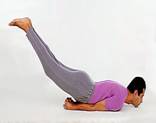
This asana is also called, The Locust. Here the focal points of concentration are the legs. Lift the legs only as much as you can. Feel the pull exerted along the muscles in the back and in the legs. Be aware of the body movements and stretching. The muscles will release and relax after stretching for a specific time period in a tense position. Mentally, yogic exercises help to gather attention and help to develop a peaceful state of mind.
Steps
• Lie down on your abdomen with the chin resting on the floor.
• With arms on both sides of the body and with fists even with the pelvic girdle inhale, lifting both legs 5 to15 inches above the floor.
• Hold this position till you feel a pull on the bottom of the spinal cord and retain this position while taking several deep breaths.
NAUKASANA
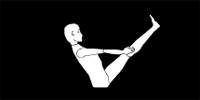
In diseases like cervical spondylysis, insomnia, bronchitis, asthma and eosinophilia, it has a great therapeutic value. Bhujangasana is one of the most important Yoga poses. Bhujangasana is also called by the name of Cobra pose. Begin inhaling and raise your chest and head slowly to the maximum limit it can reach. While performing the exercise remember to keep your hip muscles tight so that your lower back is not injured.
Steps
• Lie in the prone position with the forehead resting on the floor, legs straight and feet together, toes pointing backwards, arms bent at the elbows, palms flat on the floor, shoulders and arms on the sides of the chest and fingers kept straight And together.
• Inhale slowly and the raise the upper body (head, neck and chest). Look at the ceiling (sky) with the neck bent as far back as possible. For raising the body, only the back muscles are to be used.
• Do not push up with your arms. Waist, legs and toes should remain on the ground. Raise your body as much as possible, holding the position and retaining the breath for a few seconds.
• Exhaling slowly, return to the original position. Repeat three to four times.
DHANURASANA
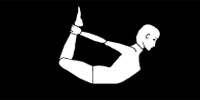
The bow works all parts of the back ,simultaneously increasing strength and suppleness in the spine and the hips .It increase backward bending , flexibility in your spinal column and release tension and Gives strength to penis and vagina to keep sexual organs in good condition.
Steps
• Lie on your stomach.
• Keep the arms on either side of the body with the chin on the ground.
• Bend the legs backward at the keens and place the heel close to the buttock, the abdomen should remain touch the ground when backward. ( 15-25) secs.
SHAVASANA
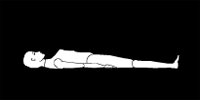
No yoga session is complete without the final pose – Savasana. The body needs this time to understand the new information it has received through practicing yoga. Even though Savasana is a resting pose, it's not the same a sleeping! You should stay present and aware during the five to ten minute duration of final relaxation
Steps
• Come to lie down on the back.
• Let the feet fall out to either side.
• Bring the arms alongside the body, but slightly separated from the body, and turn the palms to face upwards.
• Relax the whole body, including the face. Let the body feel heavy.
• Let the breath occur naturally.
• To come out, first begin to the deepen the breath. Then move the fingers and toes, awakening the body.
• Bring the knees into the chest and roll over to one side, keep the eyes closed.
• Slowly bring yourself back up into a sitting position.
ASTROLOGY
Yoga is the primary level which consists of bodily exercises to build a ground for Meditation. The word yoga had been derived from the Sanskrit word yuj which means to join to unite to balance or to integrate. Yoga is a system of exercises for the mental and physical well being. It combines stylized poses with deep meditation and breathing. According to Patanjali, within the human body there are channels called Nadi and centers called chakra. According to astrological reports for yoga asanas the above mentioned asanas are said to be effective for those who come under the following zodiac sign.
• ARIES
• GEMINI
• AQUARIUS