An eclipse of the moon occurs first on March 15th, 2006 and the next one of the Sun following in the same fortnight on the 29th. Both these eclipses will be visible in India and most parts of the world.
Lunar Eclipse on March 15, 2006
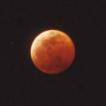
The lunar eclipse will be a total penumbral eclipse, visible expect for the ending . This will be an unusual event and the first of the only five such eclipses due to occur in the 21st century. This deep penumbral event will be best visible from Europe and Africa.
On March 15, 2006, the first penumbral contact occurs at 02h.52m., IST when the moon enters the penumbra. It will leave the penumbra at 07h.43m. IST, when the Sun would have already risen. The ending will not be visible in India.
During the eclipse, the whole Moon will lie completely within the penumbral shadow from 23h.18m. UT to 00h.18m. UT. Greatest eclipse will occur at 23h.48m.UT with a penumbral magnitude of 1.0565. This will be at 05h.18m. IST. At that instant, the Moon will stand midway in the penumbral shadow.
This eclipse occurs in Poorvashada Nakshatra. Those born in Bharani, Poorvaphalguni, Moola, Poorvashada, and Uttarashada are to perform Grahanashant.
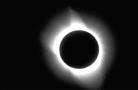
The first solar eclipse of the year 2006 will occur on Wednesday, March 29. This will be a total eclipse for those in that narrow corridor which traverses half the earth. The path of the umbral shadow of the Moon begins in Brazil and extends across the Atlantic, northern Africa and central Asia, where it ends at sunset in western Mongolia. A partial eclipse will be seen within the much border path of the penumbral shadow of the moon, which includes the northern two thirds of Africa, Europe and central Asia.
The instant of greatest eclipse occurs at 10h.11m.18s. UT when the axis of the shadow of the Moon passes closest to the center of Earth. Then the totality will reach its maximum duration of 4 minutes 7 seconds with its path width 184 kilometers. Continuing on a northeastern course, the umbra crosses central Libya and reaches the Mediterranean coast at 10h.40m. UT.